
Cassette Tape Recording Lofi Hip Hop: Full How-To Guide

How to Run Your Beats Through a Real Cassette Deck: A Cassette Tape Recording Lofi Hip Hop Guide
Affiliate Disclosure: This article contains affiliate links. If you make a purchase through these links, we may earn a commission at no extra cost to you. This helps support Widen Island and allows us to keep creating content. As an Amazon Associate I earn from qualifying purchases.
Ok, so you’ve been stacking tape emulation plugins on every channel strip, tweaking the bias knob in iZotope Vinyl for the hundredth time, and something still feels… digital. Clean. Too perfect. I’ve been there. The thing is, cassette tape recording lofi hip hop is one of those situations where the real physical thing does something no plugin can fully fake. Once you hear it, you genuinely cannot go back.
This one’s for you if you already know how to route audio in Logic Pro and you’ve got a beat you love. Now you want to push it through actual magnetic tape for that warm, slightly broken, beautifully imperfect texture. We’re going through the full cassette saturation lofi production workflow — signal chain, deck choices, tape types, wow and flutter, all of it. Budget-friendly too, I promise. Still building out your bedroom setup more broadly? My guide on 12 Essential Bedroom Producer Tips for After-Work Productivity is a really good place to start alongside this one.
Step 1 — Understand What Tape Actually Does to Your Beat
Before you plug anything in, it helps to know what you’re actually chasing. Magnetic tape doesn’t just add “warmth” — it does a bunch of specific physical things to audio. It gently compresses transients, introduces harmonic saturation especially on the low-mids, rolls off the extreme highs, and adds a subtle noise floor. And then there’s the mechanical stuff: the capstan motor wobbles slightly, the tape stretches unevenly, and you get wow and flutter. That’s the slow, dreamy pitch drift that makes a lofi beat feel like it’s breathing.
Plugins try to model all of this, and some do it really well. But a real physical machine is random — a slightly worn pinch roller, a motor that’s been running for 30 years. As a result, you get variation that no algorithm has quite nailed yet. That’s what you’re going for. It’s not about bad quality. It’s about organic imperfection that feels human. Producers like Knxwledge built entire aesthetics around exactly this kind of degraded, woozy texture.

Step 2 — Get Your Deck: Best Cassette Deck for Lofi Producers on a Budget
You don’t need a pristine studio machine for this. A slightly worn consumer deck from the 80s or 90s is often more interesting than a perfectly calibrated one. Here’s what to look for when hunting for the best cassette deck for lofi producers without spending a fortune.
What to Look For in a Deck
Only a few specs actually matter for our cassette tape recording lofi hip hop workflow. Look for separate record and playback heads, RCA line inputs and outputs, and a working bias adjustment if possible. Three-head decks are ideal because they let you hear the tape signal in real time. That way, you can dial in how much saturation you’re getting before you commit to the take.
Three Budget Decks Worth Hunting Down
The Tascam 414 MKII is genuinely one of the most fun tools a lofi producer can own. It’s a four-track cassette recorder built for portastudio use, and it’s perfect for a multitrack approach — drums on one track, chords on another. That means you can tape-saturate your boom bap drums separately from your jazzy chord stabs. The slightly crunchy, slightly lo-fi sound it puts on everything is really hard to replicate in the box.

Meanwhile, the Sony TC-WE475 is a solid pick if you want a simpler two-track stereo setup. Honestly, that covers 90% of what we’re doing here. It’s a dual-deck consumer unit that shows up on eBay and Facebook Marketplace for $20–$50 regularly. The playback quality is decent, and the wow and flutter is subtle but present. Above all, the line inputs are clean enough that you’re working with the deck, not fighting it.

For something more modern and reliable with an actual warranty, the TEAC W-1200 is a dual cassette deck still in production. It’s cleaner than a vintage deck, so the effect is subtler. However, it’s consistent and you can find them new for around $150. Good if you want predictability over pure character.
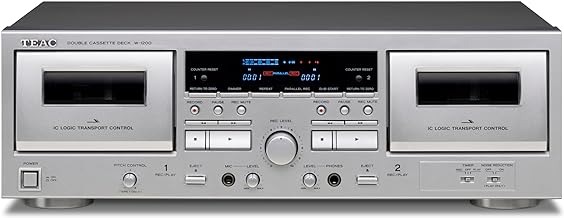
Here’s a quick comparison to help you decide:
| Deck | Type | Price Range | Best For |
|---|---|---|---|
| Tascam 414 MKII | 4-track portastudio | $80–$150 used | Multitrack tape workflow |
| Sony TC-WE475 | Dual stereo deck | $20–$50 used | Budget, maximum character |
| TEAC W-1200 | Dual stereo deck | ~$150 new | Consistent, reliable results |
No Deck? Outsource the Tape Pass

There’s one more option, and honestly, it’s the one I use for my own music. GOTAPE is a European service that records your audio onto real cassettes on professionally maintained machines. You send them your track, and they will take care of the rest. They also handle cassette duplication and printing, so the same shop can make physical tapes for your merch table. I’m a genuinely satisfied customer. It’s also a great way to hear what tape does to your beat before you commit to hardware. Moreover, they have a great collection with awesome colors to choose from.
Step 3 — Pick Your Tape Formulation
Not all cassette tapes sound the same. Many people skip over this detail and then wonder why their results feel flat. There are three main formulations and they each do something different to your signal.
- Type I (Ferric / Normal bias) — The most common, the most affordable, and honestly the most characterful for lofi. It saturates earlier, rolls off the highs more aggressively, and adds more noise. This is your friend.
- Type II (Chrome / High bias) — Cleaner, brighter, better high-frequency response. Less saturation, less noise. Good if you want a subtler effect.
- Type IV (Metal) — Very clean, very wide frequency response. Kind of defeats the purpose for lofi. Skip it.
For cassette saturation lofi production, Type I ferric tape is almost always the move. The Maxell UR 90-minute blanks are cheap and widely available. Even better, they give a consistent, slightly gritty response that works beautifully under a boom bap drum loop. I use these constantly — they’re nothing fancy, but that’s exactly the point. Record a few passes and each one sounds slightly different. That’s the magic right there.

“Type I ferric tape saturates early, rolls off the highs, and adds noise — everything lofi producers are paying plugins to fake.”
Step 4 — Build Your Signal Chain in Logic Pro
Ok, this is where we get practical. The signal chain for how to record through a cassette deck for lofi is simple once you see it laid out. You need: Logic Pro out → audio interface → cassette deck line in → cassette deck line out → audio interface → Logic Pro back in. Two passes, one tape machine in the middle. That’s the whole thing.
Setting Up the Routing in Logic Pro
Bounce your finished beat — or a rough mix — to a stereo audio file first. Don’t try to do this live from your session or you’ll introduce latency headaches. Export a clean stereo bounce at 24-bit / 44.1kHz. Then open a new, empty Logic project with a single stereo audio track set to record. That’s your tape return track.
On your audio interface, connect Output 1/2 to the Line In on the cassette deck via RCA cables. Then connect the Line Out of the deck back to Input 1/2 on your interface. In Logic’s Audio Preferences, make sure your interface is selected. Next, set input monitoring on the tape return track to ON and hit record on the deck. Then play your bounce from a media player or a second Logic window. Let it roll.
One thing to watch: your output level going into the tape deck matters a lot. Too low and you’re just adding noise with no saturation. Too hot and you’ll clip the tape heads in an ugly, not-useful way. Aim for the deck’s VU meter peaking around 0 to +3 dB on the loudest parts. That’s the sweet spot for cassette saturation lofi production — just kissing the red, as they say.

Step 5 — Control Wow and Flutter Intentionally
Most guides skip this part. Honestly, it’s one of the most interesting corners of the tape wow flutter lofi recording technique. Wow and flutter aren’t just happy accidents. You can influence them, and knowing how gives you real creative control over the final texture.
What Causes Wow and Flutter?
Wow is slow pitch drift below 6Hz, caused by inconsistencies in the capstan motor speed or tape spool tension. Flutter is faster variation at 6Hz and above, usually from mechanical vibration in the transport. A well-maintained deck has very little of both. A worn or older deck has more — and for lofi, more is usually better, up to a point.
Want to increase wow and flutter intentionally? First, let the tape spool run for a minute before recording, since cold tape has more variation. Second, use a slightly older tape that’s been rewound a few times. Finally, you can gently press the side of the supply spool while recording — careful with that one, don’t overdo it. You can also just embrace whatever your deck gives you naturally. Every machine has its own personality and that’s part of what makes this fun.
Sometimes it goes too far, and your chord progressions really do start sounding seasick. In that case, let the deck warm up for 10–15 minutes before recording, use a fresh tape, and make sure the tape path is clean. A cotton swab and isopropyl alcohol on the heads and capstan does a lot. For this reason, it’s also worth trying the tape wow flutter lofi recording technique on a couple of different decks before committing to one. They all behave differently, and that difference is genuinely interesting.
Step 6 — Record Multiple Passes and Choose Your Favorite
Here’s a workflow tip I really love and use all the time. Record your beat through the deck three or four times in a row, and capture each playback into Logic as a separate audio file. Each pass will sound slightly different — different amounts of wow, slightly different saturation, maybe a tiny speed variation. Then you pick the one that feels right for the track. Or you layer two of them at low volume for a really thick, unstable texture.
Full transparency: I don’t run my own tape passes at home. Instead, I send my music to GOTAPE, a European cassette service. They put your audio onto real tape on professionally maintained machines. Last year, a track of mine came back from them with this beautiful slow wobble on the piano chords. It made the whole thing feel like a memory, and no plugin gave me that. After all, this is the core of the cassette tape recording lofi hip hop approach: you’re collaborating with the machine, not just processing audio.
If you’re into finding interesting source material before the tape stage, my Jazz Record Digging Guide: Essential Lofi Sampling Technique goes deep on sourcing the right raw material. By the way, running a good jazz sample through tape is an absolutely beautiful combination.
Step 7 — Bring It Back Into Logic and Finish the Mix
Once you’ve got your tape recording back in Logic as an audio file, resist the urge to clean it up too much. The whole point of this cassette tape recording lofi hip hop technique is that organic texture. So don’t EQ out all the high-frequency roll-off, don’t gate out the tape hiss completely, and don’t compress it back to death.
Here’s what I do. First, a gentle high-shelf boost around 10kHz — just 1 to 2dB — brings back a tiny bit of air without losing the tape character. Then a light low-cut below 40Hz removes any rumble. Finally, I might add a touch of room reverb, something small and warm like a short plate. Want to go deeper on reverb choices for this kind of production? The Spring Reverb Bedroom Pop Production: Complete Guide 2026 is really worth reading alongside this.
Keep your dynamics natural. Don’t over-limit the final output. Lofi is supposed to breathe — that’s literally what the tape wow flutter lofi recording technique gives you. So don’t squash it flat with a limiter set to -0.1dB. Instead, aim for peaks around -6 to -3dB on your master. Let the tape noise and saturation do the heavy lifting for perceived warmth.

Step 8 — Combine Tape With Your Existing Lofi Toolkit
Real tape doesn’t mean you throw out everything else. The best cassette saturation lofi production setups use tape as one layer of the texture stack, not the only one. After the tape pass, I’ll still add vinyl crackle on top at a really low level for the surface noise character. If the wow wasn’t quite enough, I’ll add a subtle bit of pitch modulation in Logic’s Modulator plugin. Sometimes I’ll also use a gentle bitcrusher for a touch of digital grit on the drums.
One thing that pairs really beautifully with tape: stutter and freeze effects on specific elements. If you haven’t checked out the Freeze95 Plugin Lofi Hip Hop Review: Free Stutter Effects, that’s a free tool that works great on tape-processed audio. In fact, the combination of organic tape wobble and digital stutter is genuinely interesting. And if you’re curious about how AI tools fit into a workflow like this, AI Stem Separation Lofi Production: The Right Way to Use AI covers how to isolate elements before running them through tape. That opens up a lot of creative possibilities.
“Tape is one layer of the texture stack — not a replacement for everything else you know how to do.”
By the way, Bedroom Producers Blog recently covered a free browser-based sampler that turns YouTube into an MPC. Grabbing a YouTube sample, running it through tape, and then chopping it back up is a workflow I really want to try. The lofi community is always finding creative ways to stack analog and digital together like this. That’s one of the things I love most about it.
Troubleshooting: When the Tape Sounds Wrong
A few common problems and what they usually mean. Does your tape recording sound muffled and lifeless — not in a good lofi way, but in a “something is broken” way? Then the heads probably need cleaning. Dirty heads kill high-frequency response really fast. Isopropyl alcohol and a cotton swab, 30 seconds, done.
Are you getting dropouts — sudden brief silences or volume dips? Then the tape is either old and shedding oxide, or the pinch roller is worn. Try a fresh tape first. If it’s the roller, that’s a mechanical repair. It’s doable, but at that point you might just want a different deck. Finally, if the wow is so extreme the pitch feels genuinely unstable, let the deck warm up longer and use a fresh tape. That usually sorts it right out.
What You’ve Built — and Where to Go Next
If you followed all of this, you now have a real, working how to record through cassette deck for lofi workflow. You can repeat it on every track. You’ve got a deck, a tape formulation you like, and a signal chain that works in Logic Pro. On top of that, you have a feel for dialing in the wow and flutter to taste. That’s genuinely more than most lofi producers ever bother to set up, because it takes a little effort upfront. But the results are worth it every single time.
Next, try running individual stems through tape rather than the full mix — just the drums, the sample, or the bass. That’s where it gets really interesting, and it’s where the Tascam 414 MKII multitrack approach starts to shine. Want to hear a well-rounded lofi production where all these texture layers come together? Check out the Widen Island Playlists. There’s a lot of inspiration in there from producers doing this kind of thing really beautifully.
Thinking about sharing your tape-processed beats with the world? Our Lofi Music Promotion Strategy: 0 to 300k Monthly Listeners guide covers that side of things really well. You can also always submit your music to Widen Island — we genuinely love hearing what the community is making. BE BRAVE and run those beats through the tape deck. You won’t regret it 😉
/Edwin
Frequently Asked Questions
What is cassette tape recording in lofi hip hop production?
Cassette tape recording lofi hip hop is the practice of routing a finished beat or mix through a physical cassette deck. You record it to magnetic tape, then capture the playback back into your DAW. The process adds real tape saturation, harmonic compression, high-frequency roll-off, and mechanical pitch drift (wow and flutter). Together, these create an organic, degraded texture no plugin fully replicates.
What is the best cassette deck for lofi producers on a budget?
The best cassette deck for lofi producers on a budget depends on what you need. For maximum character and affordability, grab a vintage Sony or Panasonic consumer deck from the 80s or 90s. They show up for $20–$50 on eBay and are hard to beat. If you need multitrack control, the Tascam 414 MKII is the go-to. And for something new and reliable, the TEAC W-1200 runs around $150 and gives consistent results.
How do I record through a cassette deck for lofi in Logic Pro?
Bounce your beat as a stereo audio file first. Then connect your audio interface outputs to the cassette deck’s line input via RCA cables. After that, route the deck’s line output back to your interface inputs. In a new Logic Pro project, create a stereo audio track set to record. Hit record on the deck and play back your bounce. Finally, capture the tape playback as a new audio file — that’s your tape-processed version.
Which tape formulation is best for lofi saturation?
Type I ferric (normal bias) tape is the best choice for cassette saturation lofi production. It saturates earlier than Type II chrome tape, rolls off the high frequencies more aggressively, and adds a warmer noise floor. In other words, it has all the qualities that define the lofi aesthetic. Maxell UR 90-minute blanks are a reliable, affordable option that’s really easy to find.
Is real tape worth it when plugins like iZotope Vinyl exist?
Plugins are great for speed and convenience. However, a real cassette deck introduces true mechanical randomness that no plugin has fully modeled yet — motor speed variations, physical wear, tape tension inconsistencies. The tape wow flutter lofi recording technique produces pitch drift and saturation that sounds different on every single pass. That organic unpredictability is exactly what makes lofi feel human rather than processed.


